
www.industry-australia.com
24
'26
Written on Modified on
Grid-Forming Battery Storage Integration for Digital Infrastructure
Quinbrook selected GE Vernova to supply power conversion and control systems for the third phase of the Queensland energy storage facility.
www.gevernova.com
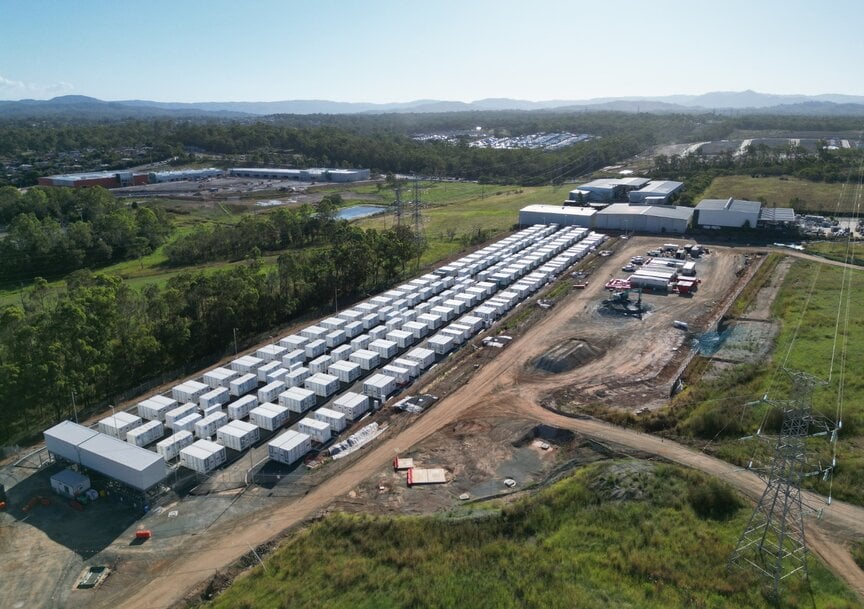
Quinbrook and GE Vernova are collaborating to expand the Supernode battery energy storage system (BESS) in Queensland, Australia, to enhance grid stability and renewable energy integration. The project applies grid-forming power conversion and intelligent control systems within the regional electricity transmission network.
Industrial Challenge and Partnership Scope
Intermittent renewable energy generation creates dynamic fluctuations in transmission networks, requiring active voltage support, frequency management, and system strength. Addressing these operational challenges at high capacity requires specialized grid-connection engineering alongside large-scale asset development. Quinbrook leads the overall development of the project site, while GE Vernova delivers the power conversion systems, central plant controls, integration engineering, and regulatory grid-connection support.
Technical Architecture and Operating Mechanism
The deployment uses grid-forming inverter technology, enabling the battery system to operate as a direct voltage source rather than merely tracking existing network signals. This function mirrors the operational stabilization traditionally provided by synchronous generators in conventional thermal plants. The primary operational and system parameters include:
- Storage and Output Specifications: Stage 3 introduces 260 MW and 1,216 MWh of four-hour storage capacity.
- Aggregated Site Capacity: Combined with the operational Stages 1 and 2, total installation reaches 780 MW and 3,075 MWh.
- Compliance Standards: Stage 3 secured Generator Performance Standards (GPS) acceptance, verifying compliance with the technical connection codes of Australia's National Electricity Market (NEM).
Technical Commentary
"Battery storage is becoming part of the operating foundation of modern electricity systems," said Ed Torres, Business Leader Power Conversion & Storage, GE Vernova’s Electrification segment. "Supernode shows what is possible when storage, power conversion and intelligent controls work together at scale. Our engineering and integration work helped Supernode Stage 3 secure Generator Performance Standards acceptance. This important grid-connection milestone demonstrates the strength of our technology and our ability to support complex projects in Australia’s demanding grid-connection environment. We are proud to expand our partnership with Quinbrook and bring grid-forming technology to Australia."
"From the outset, Supernode was designed as more than just a battery storage project. Its unique location at the heart of Queensland's transmission network makes it ideally placed to support the state’s transitioning power system well into the future. The site also has capacity for a further 520 MW of expansion, which could include battery storage, data centres or a combination of both. Opportunities to develop infrastructure at this scale, in such a strategically connected location, are exceptionally rare," said James Allan, Senior Director, Quinbrook.
Operational Impact and Infrastructure Potential
The installation functions as a transmission-level power buffer, charging during intervals of high generation and discharging during peak demand periods. The facility also reserves up to 520 MW of additional site capacity to support future expansions for battery storage or industrial digital infrastructure, such as data centers.
Edited by Evgeny Churilov, Induportals Media - Adapted by AI.
www.gevernova.com
