
www.industry-australia.com
20
'26
Written on Modified on
Fortescue Produces First Hot Metal Using Electric Smelting at Christmas Creek
Green Metal Project milestone validates electric smelting process as Fortescue advances pathway to Australian green iron production.
www.fortescue.com
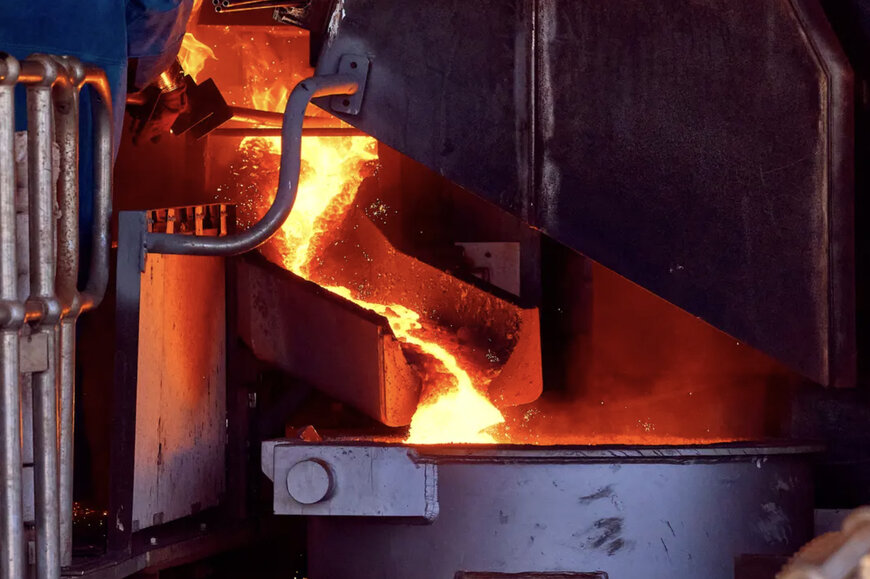
Fortescue has successfully produced its first hot metal at the Green Metal Project, demonstrating the viability of its proprietary electric smelting furnace system for the metallurgical sector. This operational milestone establishes a functional industrial pathway for converting standard Pilbara iron ore into zero-emission green iron, supporting the broader decarbonization of global steel manufacturing and its associated industrial supply chain.
Electric Smelting Furnace Architecture
At the Christmas Creek facility, Fortescue successfully generated molten metal using a pilot electric smelting furnace. This initial commission phase tests and optimizes the reduction of iron ore without relying on traditional metallurgical coal. Traditional steelmaking accounts for a significant portion of global energy system emissions, making the validation of non-coal reduction pathways critical for heavy industry decarbonization. By integrating this facility directly within existing mining operations, the engineering team evaluates process stability, thermal efficiency, and yield metrics in a live industrial environment prior to scaling up to commercial production capacities.
Renewable Resource Utilization and Supply Chain Integration
The processing methodology capitalizes on extensive regional renewable energy resources and the established extraction infrastructure of the Pilbara region. By shifting the initial refinement stages closer to the extraction site, the approach limits logistics emissions and creates a more localized industrial supply chain ecosystem.
Additional Context:
This section details technical specifications and competitive benchmarking not included in the original product announcement
The technical threshold for green iron production historically requires high-grade magnetite ores compatible with Electric Arc Furnace (EAF) technologies. However, Pilbara operations predominantly extract lower-grade hematite. To process this material, Fortescue utilizes an Electric Smelting Furnace (ESF) coupled with renewable energy. In the competitive landscape, mining operators BHP and Rio Tinto have partnered with BlueScope under the "NeoSmelt" joint venture to develop a similar pilot Direct Reduced Iron (DRI)-ESF plant in the Kwinana Industrial Area. While Fortescue has successfully achieved first hot metal at its Christmas Creek pilot facility, the NeoSmelt consortium targets a final investment decision in 2026, with an operational capacity benchmark designed to yield 30,000 to 40,000 tonnes of molten iron annually by 2028. Both ESF architectures aim to reduce total carbon emission intensity by up to 80 percent compared to conventional blast furnace methodologies.
Edited by Natania Lyngdoh, Induportals editor, assisted by AI.
www.fortescue.com
