
www.industry-australia.com
22
'26
Written on Modified on
Hitachi Energy supports Queensland battery storage project
Hitachi Energy will support the Ulinda Park BESS in Australia through power conversion technology and a 20-year HMAX Energy service agreement to strengthen grid reliability and renewable integration.
www.hitachi.com
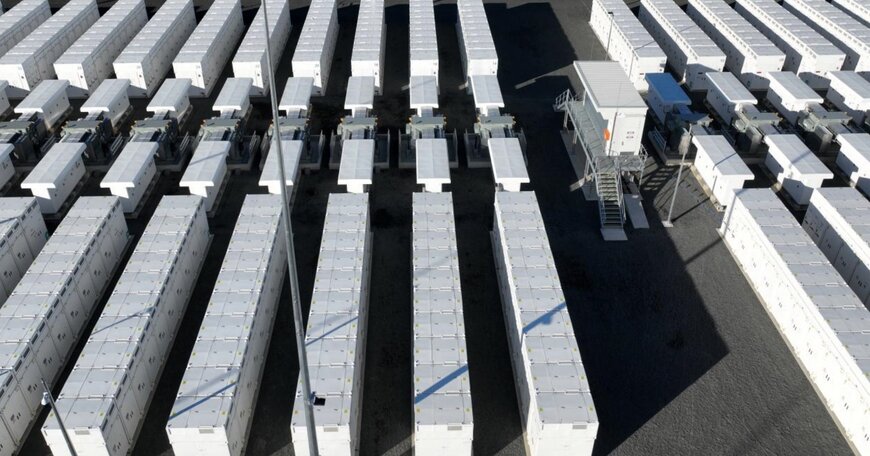
Hitachi Energy has completed the delivery and commenced long-term service support for the Ulinda Park battery energy storage system in Queensland, Australia.
The cooperation between Hitachi Energy and Akaysha Energy involves the deployment of advanced power conversion equipment and an artificial intelligence-driven management framework. This technical solution addresses the requirement for structural grid stability and firm renewable energy integration within the regional electricity sector.
Asset Intelligence Networks within the Digital Supply Chain of Energy
The relevance of utility-scale storage systems stems from the rapid decentralization of electrical grids, which demands high availability and fast dynamic response to balance intermittent generation. Operating as a critical balancing node in the digital supply chain of electricity, the 155 megawatt (MW) / 298 MWh facility is engineered to mitigate grid constraints in the Western Downs region. By implementing automated telemetry, the station communicates directly with Australia’s National Electricity Market (NEM), enabling automated participation in Frequency Control Ancillary Services (FCAS). This continuous data exchange establishes an interoperable asset layer similar to the secure communication frameworks managed within an automotive data ecosystem.
Power Conversion Mechanics and Lifecycle Engineering
The physical installation incorporates high-capacity power converters and centralized digital control technology validated through comprehensive factory testing and simulation protocols. To sustain mechanical and electrical performance over an extended lifecycle, the assets are integrated under a 20-year long-term service agreement (LTSA) utilizing the HMAX Energy service framework. This structure utilizes distributed Internet of Things (IoT) sensors to continuously capture real-time thermal, voltage, and current variables across the battery cells and inverter power stages, converting raw operational telemetry into clear health indicators.
Predictive Maintenance Workflows and Market Compliance
The service framework transitions grid operations from traditional reactive maintenance schedules to predictive, software-enabled strategies. Integrated artificial intelligence algorithms process edge-computed data to identify structural component degradation and predict potential hardware anomalies before they cause a forced outage. This predictive insight allows field maintenance to be scheduled during low-demand periods, safeguarding continuous market availability and ensuring strict compliance with stringent regulatory reliability targets. The deployment establishes a technical foundation for physical artificial intelligence in large-scale energy infrastructure, ensuring a resilient power architecture that supports regional economic and computational growth.
Additional Context
This section details technical specifications and competitive benchmarking not included in the original news announcement.
In comparison to standard utility-scale storage platforms from competitors like Tesla (Megapack 2XL) or Fluence Energy (Gridstack series), the primary differentiator of this system is the integration of the AI-powered HMAX Energy service framework over a 20-year operational horizon. While conventional BESS installations often rely on basic supervisory control and data acquisition (SCADA) systems that flag faults after a threshold violation occurs, this predictive modeling system continuously evaluates sub-millisecond electrical waveforms.
Technical benchmarks indicate that the power conversion and control loops manage diagnostic and failover latency within millisecond parameters, satisfying the strict response curves required for fast frequency response (FFR) markets globally. Furthermore, the specialized thermal containment and dynamic load tuning reduce internal auxiliary power consumption by approximately 15% under high-ambient-temperature operating states compared to legacy air-cooled installations. This efficiency gain lowers the system's absolute carbon intensity while maintaining an operational availability benchmark exceeding 98% across heavy continuous-cycling market profiles.
Edited by Romila DSilva, Induportals Editor, with AI assistance.
www.hitachi.com
